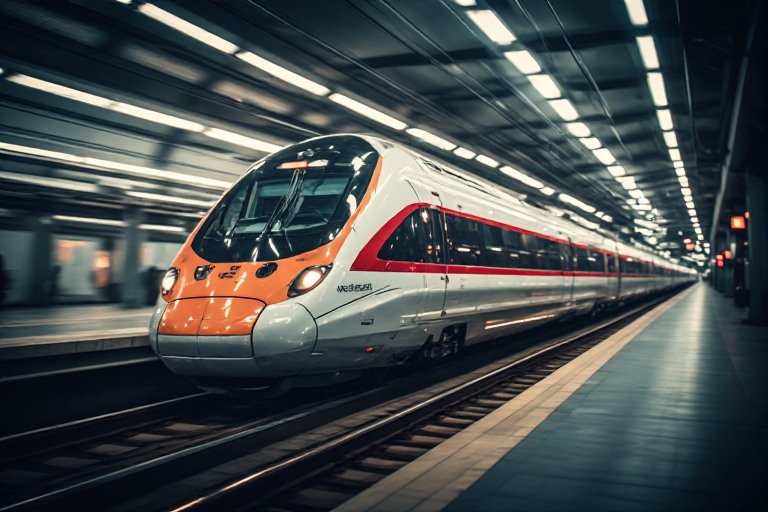
A sleek Shinkansen bursts out of a dark tunnel and straight into a proper thunderstorm, headlights slicing through walls of rain and flying water. The on-screen numbers hit hard: Tokyo to Osaka in two hours. Five hundred and fifteen kilometres. Three hundred and twenty kilometres per hour. Ticket price — ninety dollars. Outside, the sky is throwing a full tantrum. Inside, the train simply refuses to care.
This is the legendary Tokaido Shinkansen, the world’s first high-speed rail line, opened in 1964 and still setting the standard for reliability. In real life the fastest Nozomi services cover the roughly 515–550 km between Tokyo and Shin-Osaka in about two hours and twenty to thirty minutes, regularly hitting 285 km/h and higher on certain sections. The 320 km/h figure on the video is the kind of number that makes engineers smile and passengers feel like they’re living in the future. And that ninety-dollar price? It’s not far off — a one-way reserved seat on a Nozomi usually lands somewhere around that range depending on the exchange rate and how early you book.
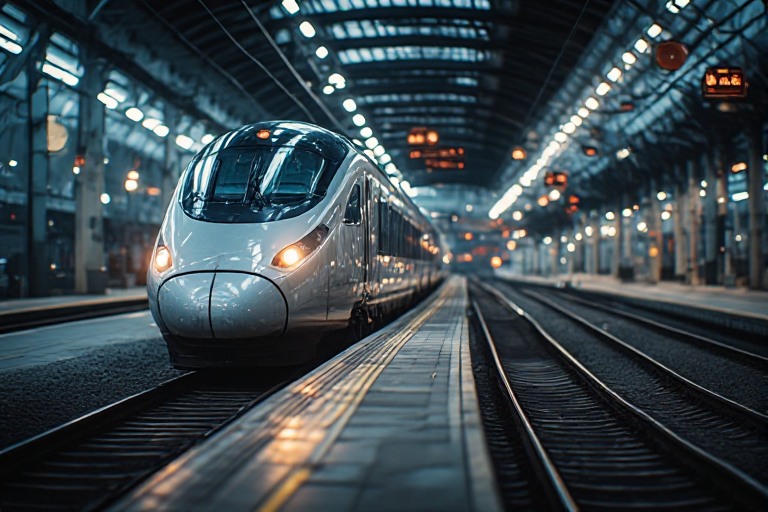
What makes the scene even better is the weather. Japanese bullet trains are famous for running through typhoons, heavy snow and thunderstorms with almost boring punctuality. While other countries cancel services at the first sign of serious rain, the Shinkansen just keeps going, its aerodynamic nose pushing water aside and its advanced suspension soaking up the chaos. The video captures that quiet Japanese superpower: the ability to make the extraordinary look routine. Passengers sit in quiet cars, phones in hand, coffee in cup holders, completely unfazed by the apocalyptic weather outside the windows.
There’s something deeply satisfying about watching a machine that simply does what it promises. No drama, no excuses, no “due to the weather” announcements that last three hours. Just pure, controlled speed cutting through the storm. In a world full of delays and cancellations, this two-hour dash from Tokyo to Osaka feels like a small act of rebellion against chaos itself. The train doesn’t just travel the distance — it conquers it, thunderstorm and all.